
Every family considering the purchase of an ATV for their child goes through a similar process: researching, comparing, asking questions, and finally making a decision. One of the first and most common questions that arises during this process is whether to choose a gas-powered ATV for children or opt for an electric model. Both types of propulsion have their place in the market, and either can be an excellent choice, depending on a family's specific needs. Rather than declaring a winner, we present seven key questions below; the answers will help parents make the right decision on their own.
Terrain is one of the most important factors when choosing the type of drive. If the child drives on open, uneven terrain, on muddy paths, uphills and forest roads, gasoline models offer an advantage in the form of greater power and stable performance under load. KAYO AT125 and KAYO AT110 They are designed specifically for that type of use and provide a response that remains consistent, regardless of the difficulty of the terrain.
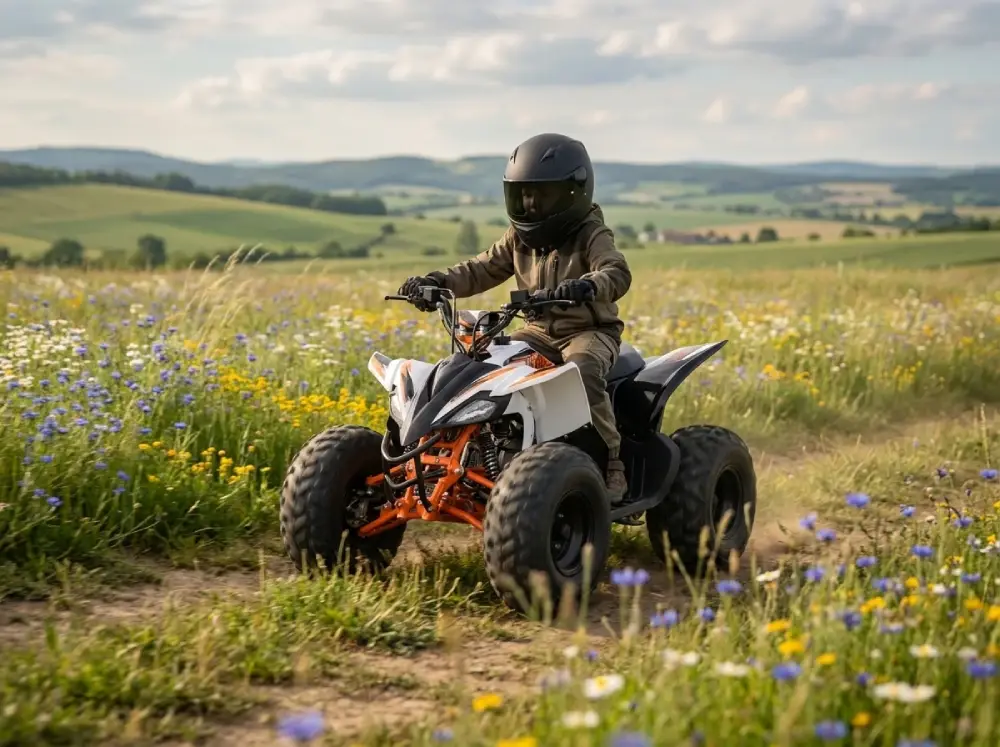
If a child is riding in the yard, on a grassy area, or near the house, an electric model is perfectly suited for these conditions. The quiet electric motor does not disturb the surroundings, and its performance is well-balanced, ensuring a comfortable and safe ride on moderate terrain. Consider where the vehicle will be used most often; the answer to this question will immediately narrow down your options by half.
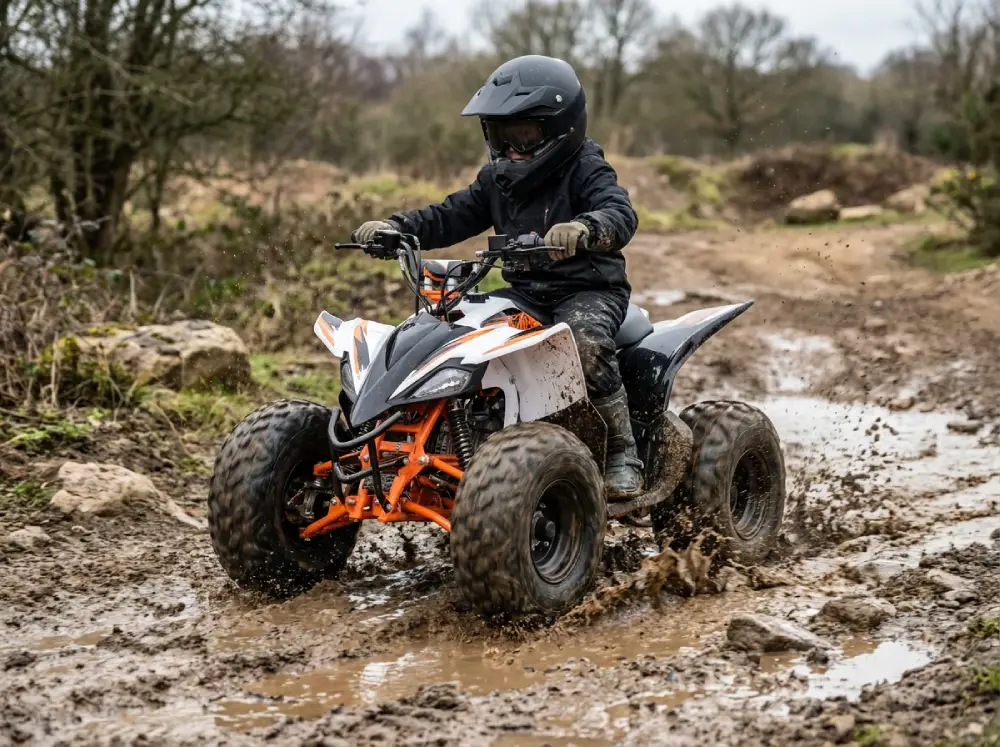
The duration of a ride directly influences which type of powertrain is more practical. For long, multi-hour excursions in open terrain, a gasoline-powered quad offers unlimited range, as refilling the tank takes only a few minutes, allowing the ride to continue without delay. KAYO AY70 Other gasoline-powered models from the KAYO lineup are also ideal for families planning longer off-road adventures.
For shorter driving sessions lasting one to two hours, an electric model perfectly meets the needs. The vehicle charges overnight and is fully ready for another outing by morning. If a child drives daily for shorter periods, the electric powertrain offers sufficient range without any compromises to the driving experience.
Electric quad bikes for children operate in near-total silence. The electric motor does not produce the noise characteristic of internal combustion engines, making them ideal for residential areas, smaller properties, and environments where noise is a concern. For parents living in more densely populated areas—or those who simply wish to avoid disturbing the neighborhood—an electric model is the natural choice.
Gasoline-powered models feature an authentic engine sound that is part of the off-road experience. In natural settings—such as on rural properties or open terrain away from populated areas—engine noise is not a limiting factor; in fact, many parents and children view it as an integral part of the driving experience. KAYO petrol-powered quads for children They are designed with systems that minimize vibrations and ensure a comfortable ride, even during longer sessions.
Electric quads for children have a simpler maintenance schedule. With no need for regular oil changes, spark plug checks, or air filter cleaning, basic maintenance is limited to checking the battery, tires, and brakes. For parents who prefer a vehicle that does not require frequent trips to a service center, an electric model offers that advantage.
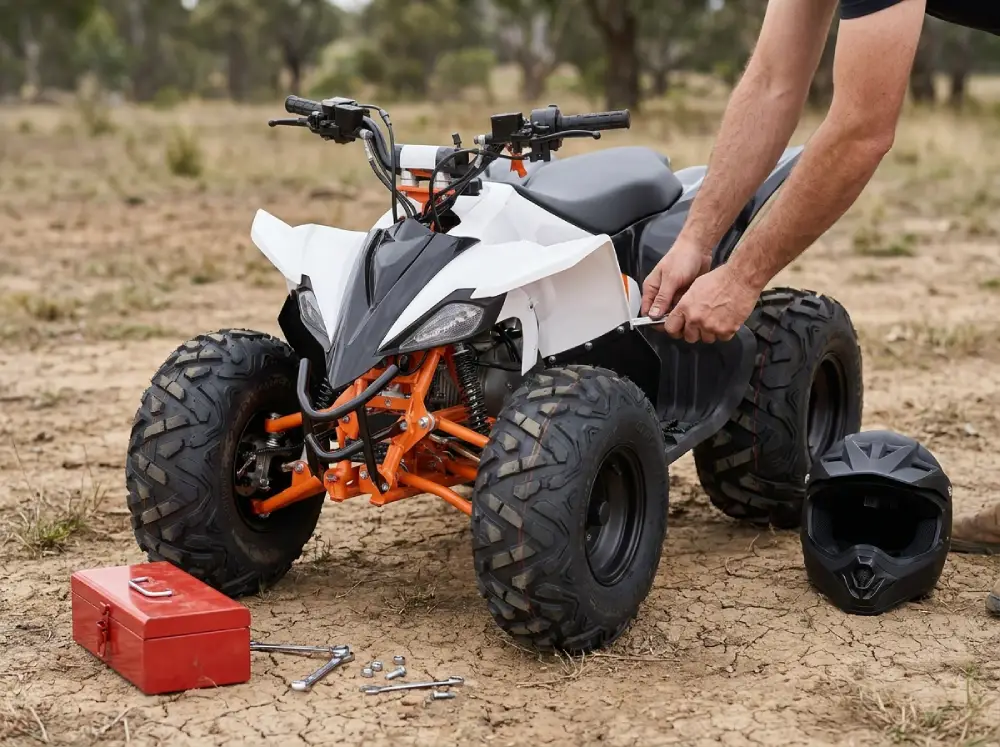
Gasoline-powered models require periodic servicing, which includes changing the oil, inspecting and cleaning specific components, and adjusting chain tension. These procedures are not complicated and can be performed by any experienced mechanic, but they require consistency. KAYO Service It provides expert support for all models and guarantees the availability of original spare parts, regardless of the type of powertrain you choose.
Climatic conditions can be a decisive factor, especially for families in mountainous and rural areas. A gasoline engine operates reliably across a wide temperature range and, with the appropriate oil, remains functional even during the colder months. For parents whose children ride in both autumn and spring, a gasoline-powered vehicle offers a longer period of usability throughout the year.
Lithium-ion batteries in electric models can be more sensitive to low temperatures, as they lose some of their capacity in the cold. However, for families who drive primarily during the summer season or in temperate climates, this does not pose a significant limitation. Speak with our team about the climatic conditions in your area and which model is best suited to handle them. Feel free to... contact for a recommendation tailored to your situation.
For the youngest beginners, electric models can offer an easier introduction to the world of children's ATVs. The electric motor provides a direct and predictable response, eliminating the need for the type of throttle control required by gasoline engines. Their quiet operation and simplicity help the child focus on mastering the basics of handling, without any additional distractions.
As children gain experience and grow older, many parents switch to gasoline-powered models, which offer a more authentic and challenging driving experience. KAYO AY70 is a perfect introduction for the youngest, while KAYO AT110 and KAYO AT125 are suitable for children with more experience who are physically better prepared for more demanding terrain. Team KAYO Serbia can recommend the right model based on your child's age and experience.
If you plan to use the vehicle for several years and pass it on to younger children in the family, gasoline-powered models have an advantage in terms of long-term mechanical reliability. With proper maintenance, a gasoline engine can function for years without the wear and tear that a battery inevitably undergoes through cycles of charging and discharging.
If you plan to use the vehicle for one or two seasons and then replace it with a newer model, an electric quad offers the perfect balance between simplicity and riding enjoyment. Lower maintenance requirements over a shorter period of use make it an economical and practical choice. Take a look. the complete range of KAYO quads for children and choose a model that fits your plans.
Gas-powered and electric quad bikes for children are not in competition with one another; rather, they represent two different solutions tailored to the distinct needs of various families. Gas-powered models are characterized by their power, range, and reliability on demanding terrain over a longer riding season, while electric models offer quiet operation, simple maintenance, and an eco-friendly riding experience. Choosing the right model will ensure a long-lasting source of joy and off-road adventure for your child. Explore KAYO petrol and electric quads for children and, with the help of our team, find the one that perfectly suits your child. For any questions, feel free to... contact.


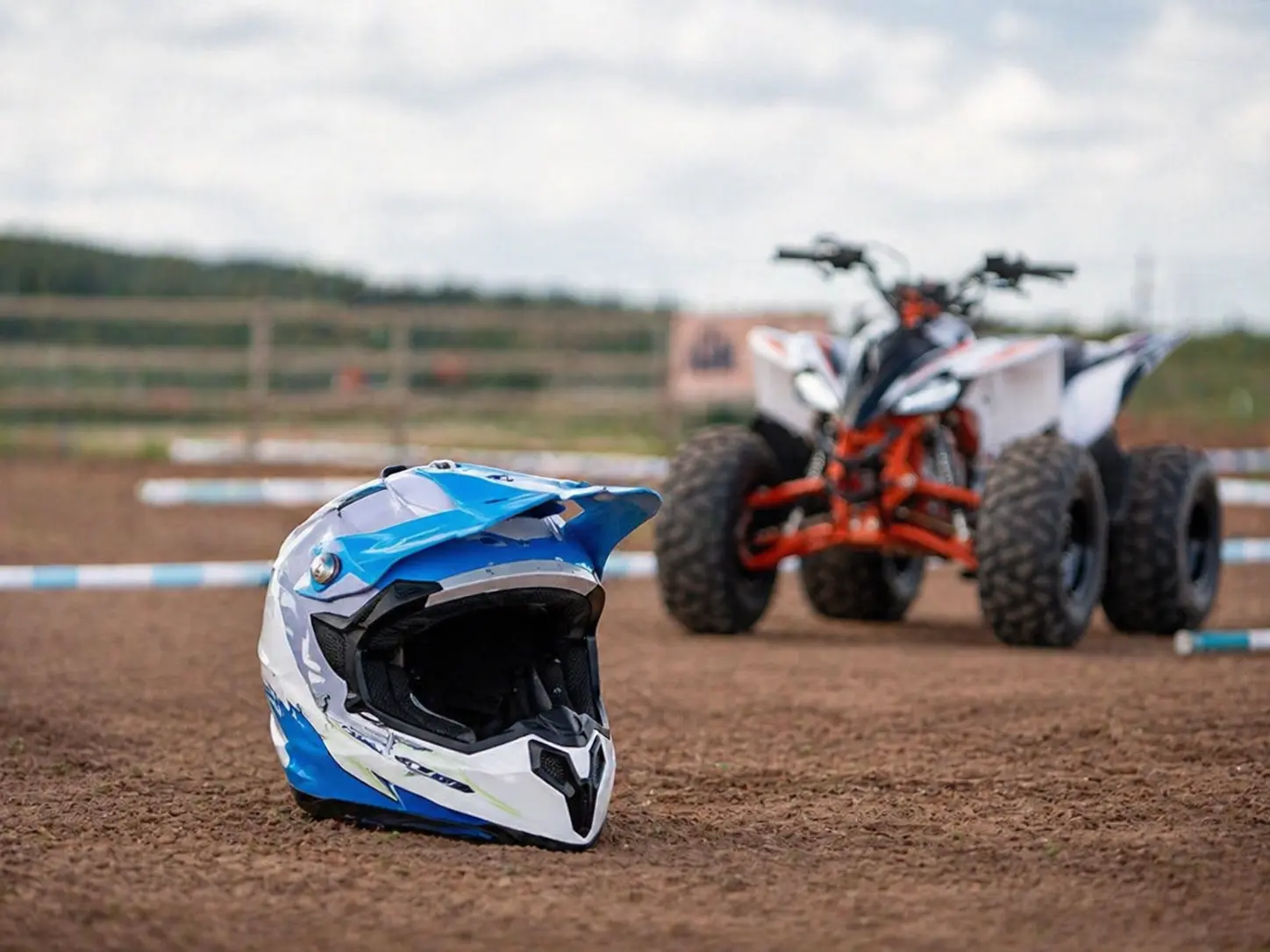
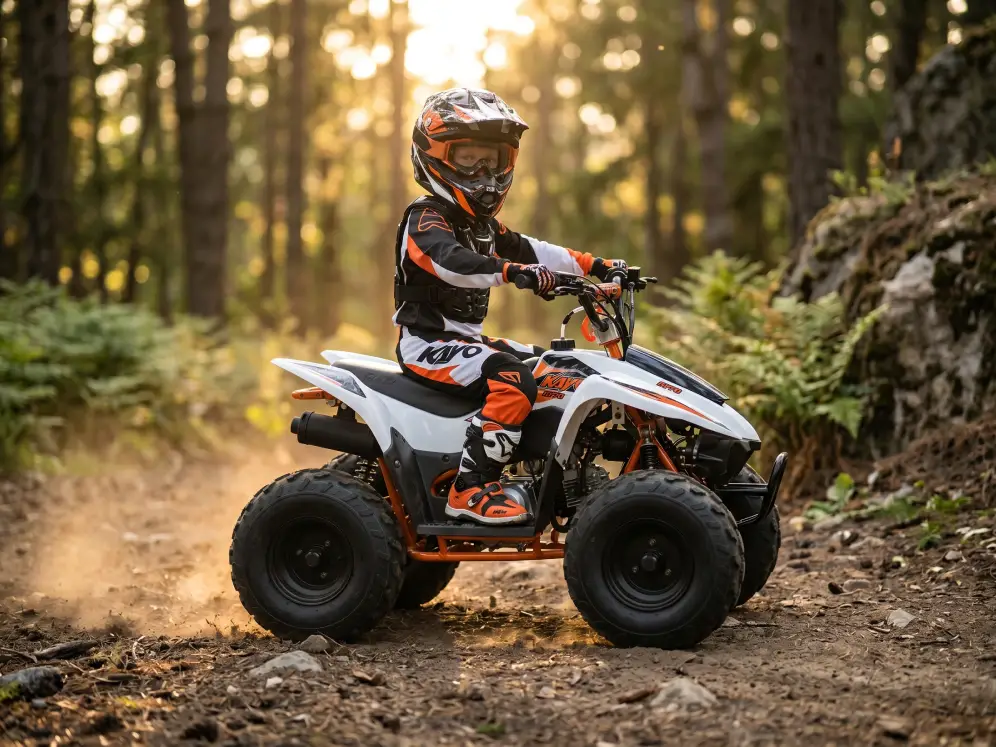

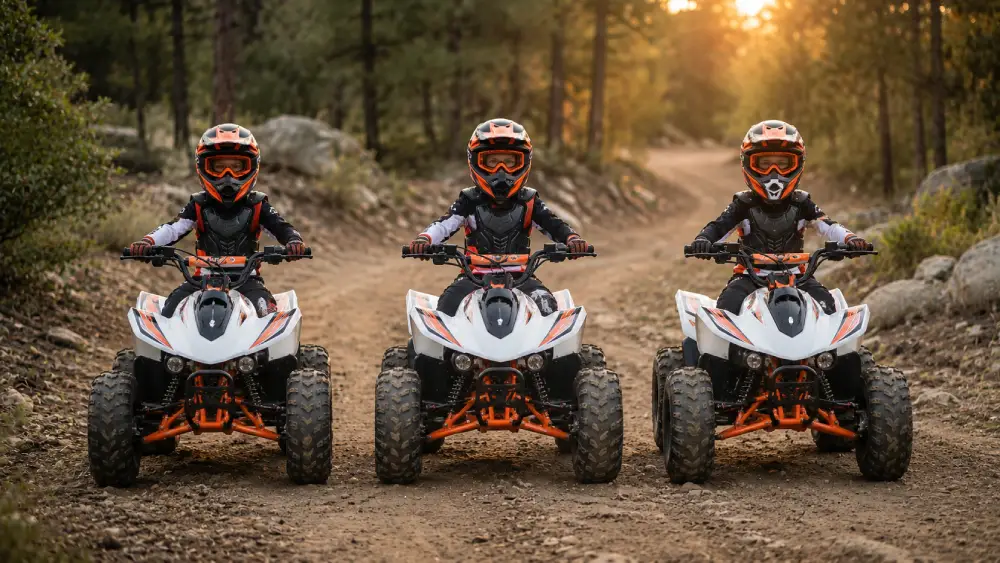
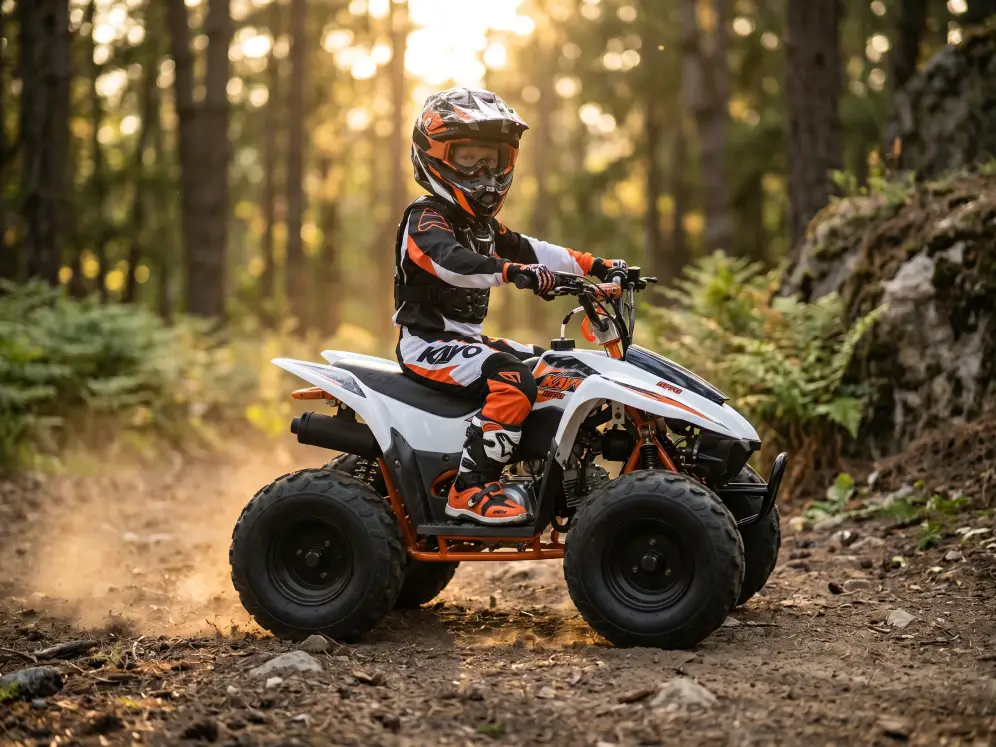
Premium ATV vehicles for children. With KAYO ATV vehicles, every start of an offroad adventure will be an unforgettable childhood experience for your child.
Stay up to date with news from the ATV world and receive all important information to your email address.